


I’ve been lucky enough to attend some fantastic tastings during my 32 years (and counting!) in the wine trade, but one of the most memorable was in 2014 and that was a Chilean varietal tasting.
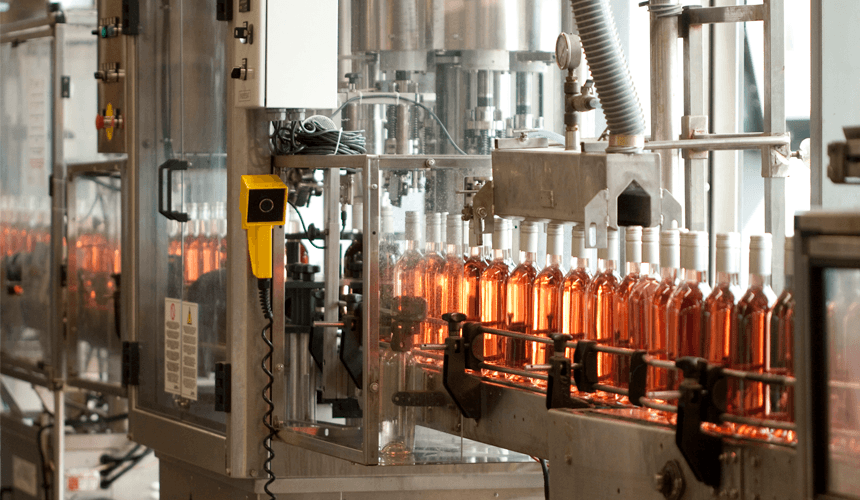
So what made this tasting so memorable? To briefly give the background, our main Chilean producer at the time had notified us that they were switching from bottling in Chile to bulk shipping and bottling in the UK.
Bulk shipping is used as a method of reducing shipping costs and saves a few pence per bottle compared with shipping in glass bottles. Over the last 15 years there has been a huge surge in bulk shipping, driven by the supermarkets, with estimates ranging between 45 and 55% of the wine consumed in the UK is now bulk shipped. And with UK consumption estimated at over 1 billion bottles annually, that’s a lot of wine!
Wines are transported in 25,000 litre plastic flexi-tanks and undergo a heavy filtration prior to shipping. They are also heavily filtered again once they arrive in the UK prior to bottling.
Given the importance of the Chilean wines in question, we pushed back and politely requested a re-consideration, but it was fait accompli. The brand in question, El Picador, is our own, and so whilst we like to have a long term relationship for the supply, we do have the freedom to switch if ever we feel the price or quality are not up to scratch.
Our immediate instinct was that we needed to switch to an alternative supplier, but to ensure continuity of supply we agreed to take a mixed container of UK bottled stock – which led to that memorable tasting.
We were in a fairly unique position as we had the opportunity to taste the same wines, from the same vintage with a source bottled one alongside a bulk shipped version. Normally this opportunity isn’t possible but we knew we had to remove the bias we would inevitably individually have from the tasting.
The tasting comprised 5 wines – Sauvignon Blanc, Chardonnay, Cabernet Rose, Cabernet Sauvignon and Merlot. The tasting ‘panel’ comprised the 5 members of our buying team, and we arranged for a 6th colleague to prepare the wines so we were tasting blind, in pairs, both Sauvignons, then both Chardonnays etc.
We also agreed not to communicate during the process (we normally discuss our views on wines openly during buying tastings). I remember being stunned at the difference between each set of wines – the theme being that one wine leapt out of the glass with lots of varietal character whilst the other was ‘dull’
We then each voted for which version of each wine we preferred – this was going to be interesting! Normally in tastings we broadly agree, but there are always some wines we disagree. This was the first tasting that all 5 of us agreed on all 5 pairs.
Onto the results – the source bottled wines won hands down in every case. The decision was immediately made to switch supplier and our first shipment arrived in Spring 2015. We are still using that same Family Owned supplier, who is committed to bottling at source and interestingly the Sauvignon Blanc has just won the Best Value White Wine Trophy at the Wine Merchant Top-100 competition.
From that moment we made source bottling a corner stone of our buying policy. Interestingly, when we audited our range at that time we only had 4 wines (out of 2,500) which were UK bottled – clearly through our rigorous tasting process we were already avoiding wines shipped in bulk.
So why does bulk shipping reduce the quality of wine? Well firstly there is the previously mentioned heavy filtration. This tends to strip some of the aromatics from the wine. I recently had a discussion with Santiago Gouguenheim, winemaker at Gouguenheim Winery in Mendoza. A few years ago he was approached by a customer in the USA to buy Malbec in bulk.
Once the wine was approved, he was then given the required preparation details. The level of filtration required was higher than the equipment in the winery was capable of delivering, so he had to hire additional equipment to filter it. And he agrees with me, this level of filtration simply strips character and aromatics from the wine whilst losing freshness.
Prior to bulk shipping, wine is typically stabilized with sulphur dioxide (SO₂) or potassium metabisulfite. These act as antimicrobial agents to prevent renewed fermentation and preservatives to protect the wine from oxidation during transit.
Wine is not a neutral commodity. Even after fermentation, it remains chemically and structurally sensitive. Oxygen ingress over extended transit periods, heat fluctuations inside shipping containers (25–40°C) and prolonged contact with synthetic polymer liners are all issues which can impact bulk shipped wine.
Another personal observation on bulk shipped wine is how it tastes on day 2. A bottle of wine partly consumed on day 1 and then finished on day 2 often tastes as good if not better on the second day when bottled at source. Conversely, with bulk shipped wines they often simply fall apart on day 2.
It is no coincidence that many of the world’s most respected wine regions explicitly recognise that how and where wine is finished matters to quality. Regions such as Rioja, Chianti Classico, Barolo & Champagne insist that wines are bottled at source.
And even the Supermarkets who champion the environmental argument as the reason for bulk shipping, are quick to celebrate that the wines they really care about (Sainsbury’s Taste the Difference for example) are bottled at source.
Bulk shipping is frequently presented as the “more sustainable” option. The logic appears straightforward: fewer glass bottles transported equals lower emissions.
However, this argument is incomplete. Energy and water used in vineyard and winery production are already “spent”. The additional steps with bulk shipping (not least filtration) in turn have their own carbon footprint. And the nail in the coffin for the environmental argument – a lot of the glass used to bottle is imported and not produced in the UK!
Independent wine shops, restaurants and pubs need to compete on quality first and offer a point of difference when it comes to wine. Committing to source bottled wines is a good policy to adopt.
I’ll leave that last word to Santiago Gouguenheim, when I asked him would he sell in bulk in the future – ‘Never again!’
 Back to blog